
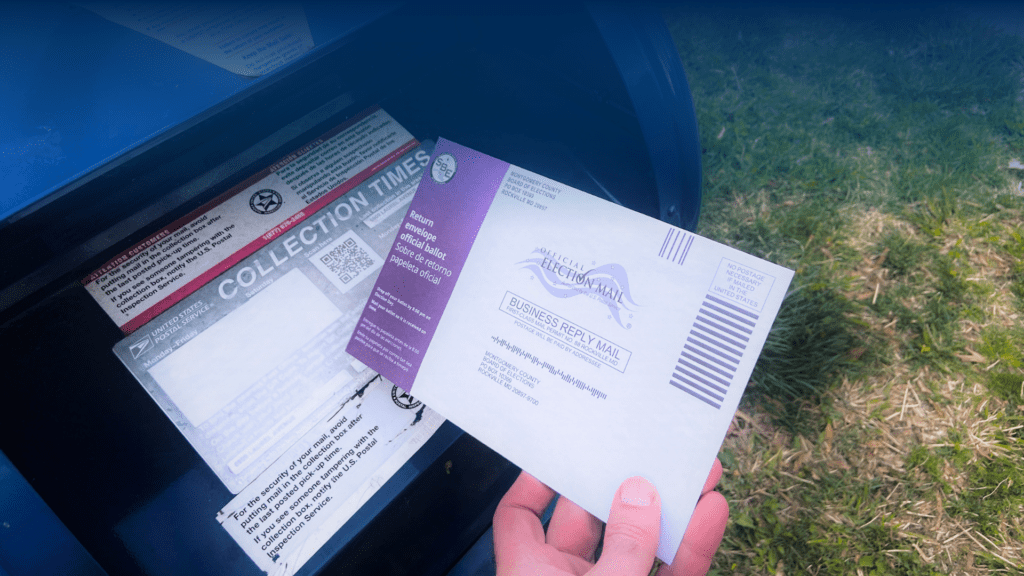
As the November elections near, Vote-by-Mail has dominated the headlines. In March, the White House issued an executive order mandating that the USPS regulate who can receive ballots, and lawmakers in Congress are debating potential restrictions on Vote-by-Mail. It is important to know the facts.
There are many safeguards in place at each phase of the mail-in voting process. Voter registration verification, ballot tracking, and signature matching are just some of the ways that states keep Vote-by-Mail safe. According to the Institute for Responsive Government, “like ballots cast in person, mail ballots are subject to sophisticated and redundant chain-of-custody protocols, physical seals and barriers, exceedingly controlled access, bipartisan teams, and surveillance.”
When it comes to the security of voting by mail, studies show that voter fraud is extremely rare. The Brookings Institution reported that there have been fewer than 200 cases of mail-voting fraud between 2016 and 2022, amounting to 0.000043%, or about 1 in 2.5 million. A person is more likely to get struck by lightning than to cast a fraudulent mail-in ballot.
In terms of reliability, the USPS reports that since 2020, postal workers delivered over 97% of ballots in federal elections to election officials within just three days. That number jumps to over 99.8% of ballots delivered within one week. The table to the right, titled “USPS Post-Election Reports,” clearly illustrates that the American people can rely on us to process and deliver their ballots on time.
Voting by mail has many additional benefits, including accessibility and higher turnout. Casting a mail-in ballot allows millions of Americans who would have otherwise stayed home to vote. This applies to many registered voters, including those without access to transportation, those with disabilities, those living in rural areas, those without paid time off to vote, and more.
Vote-by-Mail is not a partisan issue. Republican states like Utah and Democratic states like California mail ballots to every registered voter. The Pew Research Center reports that almost 60% of Americans favor of Americans favor “allowing any voter to vote by mail if they want to.”
As postal workers, we have proven that we can efficiently process and deliver ballots during every election season. In addition to “extraordinary measures,” the Postal Service also has an Election Mail Task Force, which includes both management and the postal unions. Statistics show that our work makes Vote-by-Mail reliable, secure from fraud, and a safe voting option for millions of Americans.
The post The Numbers Don’t Lie: Vote-by-Mail Is Safe, Secure, Reliable first appeared on APWU.